Can I Sell My Condo Parking Spot Separately? A Checklist for Owners
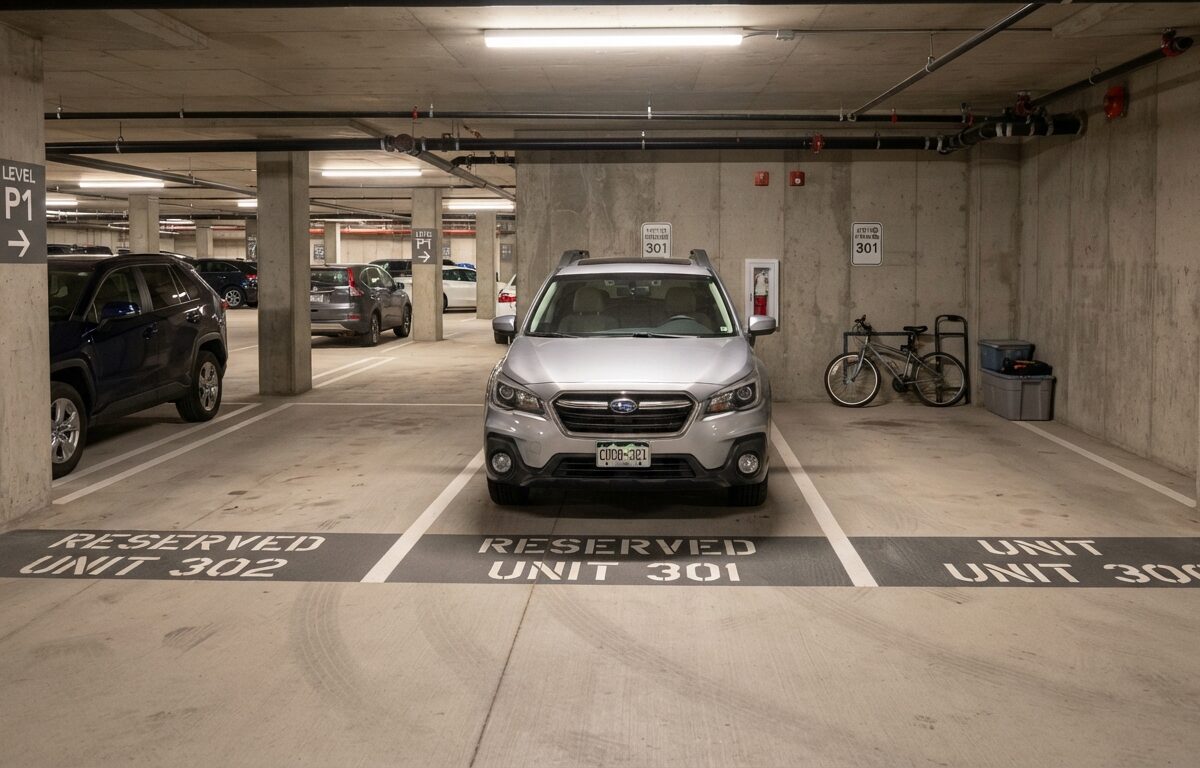
- You can sell your condo parking spot separately if it’s a deeded unit, or a limited common element your declaration lets you transfer.
- Most buildings limit who can buy. The likeliest buyer is another owner in your building.
- Watch for a right of first refusal, board approval, a minimum-spaces-per-unit rule and your lender’s sign-off.
- In many places, moving a limited common element to a neighbor takes a signed amendment to the declaration, not a deed.
You kept the condo but lost the car. Or your building came with two spaces and you use one. Either way you’re paying for concrete you don’t need, and you’re asking: can I sell my condo parking spot separately from my unit?
Often, yes. Here’s the checklist to find out, and the two different ways the sale can happen.
The checklist
1. Find out what kind of space you have
Pull your deed and the condo declaration. You’re looking for one of these:
- Deeded parking unit. Separate legal description, often its own tax bill. Usually sellable on its own.
- Limited common element (LCE). Reserved for your unit in the declaration. Often transferable to another owner in the building.
- Assigned common element. The association owns it and assigns it. Usually not sellable.
If you’re unsure, our guide to deeded vs assigned parking spaces shows how to tell them apart.
2. Read the transfer rules
Search the declaration and rules for “parking,” “transfer,” “lease” and “first refusal.” Look for:
- Who can buy. Many buildings only allow sales to other unit owners. In Ontario, Davidzon Law says >most condo corporations prohibit non-owners from owning parking or locker units.
- Minimum spaces per unit. Some associations won’t let a unit drop below one space, which could block your sale entirely.
- Right of first refusal. The association may get to buy the space on the same terms as your buyer.
- Board approval and transfer fees.
3. Check your mortgage
If your mortgage covers the space, your lender has to release it before you can sell. Ask your loan servicer about a partial release. Expect paperwork and possibly an updated valuation.
4. Pick the right way to transfer it
How you sell depends on step 1.
Deeded space: sell it with a deed. You sign a purchase contract, the buyer gets title work, you sign a deed at closing and the buyer records it. It works like a small real estate sale. See how to sell a deeded parking space for each step.
LCE space: amend the declaration. You and the buyer, who is almost always another owner, sign an amendment that moves the space from your unit to theirs. In Nevada, >NRS 116.2108 sets out this process, unless the declaration says otherwise. The association records the amendment. Florida allows LCE transfers where the declaration provides for them, under section 718.106. If yours doesn’t, owners would need to vote to amend it. In Chicago, attorneys handle these amendments and the two owners split the cost.
Money changes hands the same way in both cases. The paperwork is what differs.
5. Handle tax and records
After closing, make sure the association updates its parking list and the tax bill moves if the space had its own. In Ontario, parking is often on the unit’s tax roll number, so tell the municipal tax office. A profit on the sale may be taxable. Ask your accountant.
What if the answer is no?
If your space is an assigned common element, you usually can’t sell it. You still have options:
- Offer it back. Ask whether the association will take it or reassign it to someone on a waitlist. It may not cut your costs, but it frees the space for a neighbor who needs it.
- Rent it out, if the rules allow. Many buildings allow rentals to residents only. Compare the numbers in rent or sell my parking space.
- Ask the board whether it would consider converting spaces to limited common elements. That’s a building-wide decision, but it’s happened. In the Bronx, Fieldstone Plaza Condominiums began selling its spaces in 2010 and raised about $300,000 for repairs and reserves, >per Habitat Magazine.
Setting a price when your buyer pool is small
When only residents can buy, you might be selling to a handful of people. Find what spaces in your building have sold for, then check local monthly parking rates. A neighbor paying $250 a month for a garage down the street has a clear reason to buy. Our guide to how much a parking space is worth covers the math.
This is general information, not legal advice. Your declaration and local law decide.
List it where buyers can find it
If your rules allow outside buyers, list your space on The Parking Space Company so people searching for parking nearby can find it. If you’re buying, browse spaces for sale. Questions? Contact us.
Leave a Reply