Trailer Parking Space for Rent: Boat, Utility and Cargo Trailers
The short version
- Measure your trailer with the tongue and any outboard motor included, because that’s the length an owner will care about.
- Boat, utility and cargo trailers each need different things from a space, so match the space to how often you tow.
- Street parking for trailers is restricted in many cities, which is why a private rented space is often the only legal option.
- Get pull-through or turnaround room confirmed before you sign, since backing a trailer into a tight lot every weekend gets old fast.
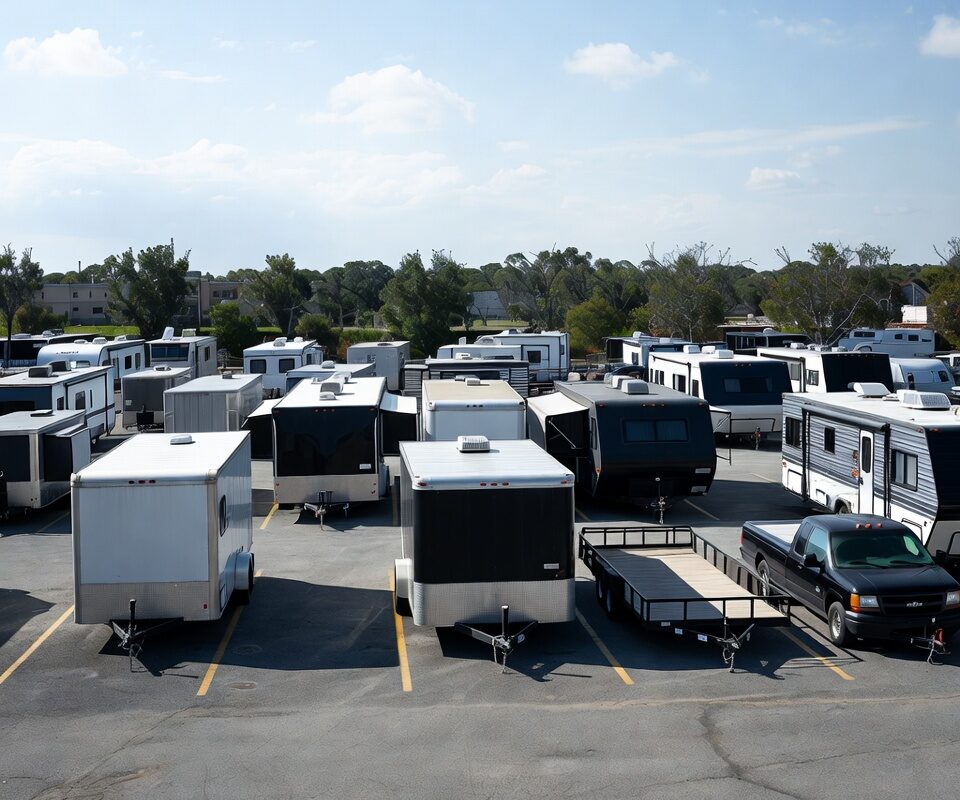
A trailer parking space for rent needs to fit more than the trailer. It has to fit the way you hook up, pull out and come back, often in the dark or on a Sunday night with a wet boat. Most people shop for trailer storage the way they’d shop for car parking and end up with a space that technically fits but is a pain to use. Here’s how to pick the right one for a boat, utility or cargo trailer.
Why a rented space beats the street or the driveway
Plenty of trailer owners start by leaving it at the curb or in the driveway. Both tend to stop working.
Cities often limit how long trailers and boats can sit on public streets. Philadelphia, for example, bars parking a boat on the same block for more than 15 days, and in several council districts the limit is three hours or the posted time. Your city’s rules will be different, so check your municipal code before you assume the curb is fine.
Driveways run into HOA covenants and neighbor complaints. Many associations ban visible boats and trailers entirely. If yours does, a trailer parking space for rent nearby is usually the cleanest fix.
Measuring for a trailer parking space for rent
Owners list every trailer parking space for rent by length, and trailers are longer than people think. Measure from the tip of the coupler to the farthest point at the back. For a boat, that’s often the outboard motor or swim platform, not the transom.
Write down:
- Overall length, coupler to rear
- Widest point, including fenders and any beam overhang on a boat
- Height, if the space is covered or indoors (include the bimini top, T-top or cargo roof vents)
Then add room to work. You’ll want a few feet at the front to walk around the tongue and drop the jack, and enough side clearance to open a truck door. A space that’s exactly your trailer’s length will feel tight every single time.
Boat trailers
Boat storage is the most seasonal of the three. Most owners either want a spot for the months they’re on the water, close to the ramp, or a winter spot where the boat can sit untouched.
What matters for boats:
- Covered or indoor, if you can afford it. Sun and snow do real damage to gelcoat, upholstery and covers.
- Drainage. A space that pools water isn’t ideal for anything on wheels, and trailer bunks and bearings sit right at ground level.
- Distance to the ramp. Every extra mile is another tow each trip.
- Rules about working on the boat. Some owners ban flushing engines, changing oil or anything that leaves a mess.
If you’re also storing an RV or thinking about indoor options, our guide to covered, uncovered and indoor RV spaces covers the trade-offs, and most of it applies to boats too.
Utility trailers
Utility trailers are usually the easiest to place. They’re shorter, lower and less valuable, so a plain outdoor gravel or paved spot often works. The question is access. Lawn crews, contractors and weekend DIYers tend to use them often and at odd hours.
Look for 24/7 access or at least early-morning access. Ask whether you can leave the trailer loaded, because some owners won’t allow materials or equipment left on an open trailer. And think about theft. Open utility trailers are easy to hitch and drive off with, so a coupler lock and a wheel lock are worth buying no matter where you park.
Cargo and enclosed trailers
Enclosed cargo trailers are basically rolling storage units, which makes them tempting targets. They’re tall, so indoor storage is harder to find, and they’re often full of tools, inventory or race gear.
For a cargo trailer, security moves to the top of the list. Ask about gated entry, lighting, cameras and who else has access to the lot. Confirm that you’re allowed to keep contents inside, and check with your insurer about whether those contents are covered while parked off your property. Our piece on who covers what when you rent a parking space explains the gaps people miss.
Access, turning room and hookup
This is where most trailer rentals go wrong. Before you commit, pull in with your actual tow vehicle and trailer, or at least walk the path you’ll take.
- Can you pull straight through, or will you need to back in every time?
- Is there room to swing wide without hitting other vehicles, posts or fences?
- Where do you park your tow vehicle while you hook up?
- Are gate hours compatible with a 5 a.m. launch or a late return?
If the answers aren’t great, keep looking. There’s always another trailer parking space for rent. A cheaper space you dread using isn’t a deal.
Contract points to get in writing
Private trailer rentals are often informal, which is fine until something goes wrong. Your agreement should name the trailer by description and plate, state the monthly rate and when it’s due, and say whether you can store a different trailer or vehicle in the same spot later. It should also cover notice periods, what happens if the owner sells the property, and who’s responsible for damage. Our checklist for what your parking contract should say is a good starting point.
[JON: real example of a trailer storage arrangement that worked well, or one where access or contract terms caused problems.]
Trailer parking FAQ
Can I rent a regular car space for a small trailer?
Sometimes. A short utility trailer might fit a standard stall, but many owners won’t allow trailers without asking first. Get permission in writing.
Do I need to keep my trailer registered while it’s in storage?
Rules vary by state and by owner. Many space owners require current registration and plates as a condition of the rental, so plan on keeping it current.
Is it worth renting near my house or near the water?
If you tow often, near your house. If the boat mostly stays put for the season, near the ramp saves you hours of towing.
Find a space for your trailer
Browse current listings for outdoor, covered and indoor spaces that take trailers. If you’ve got a lot, barn or long driveway with room to spare, list your space and let trailer owners find you.
Leave a Reply